
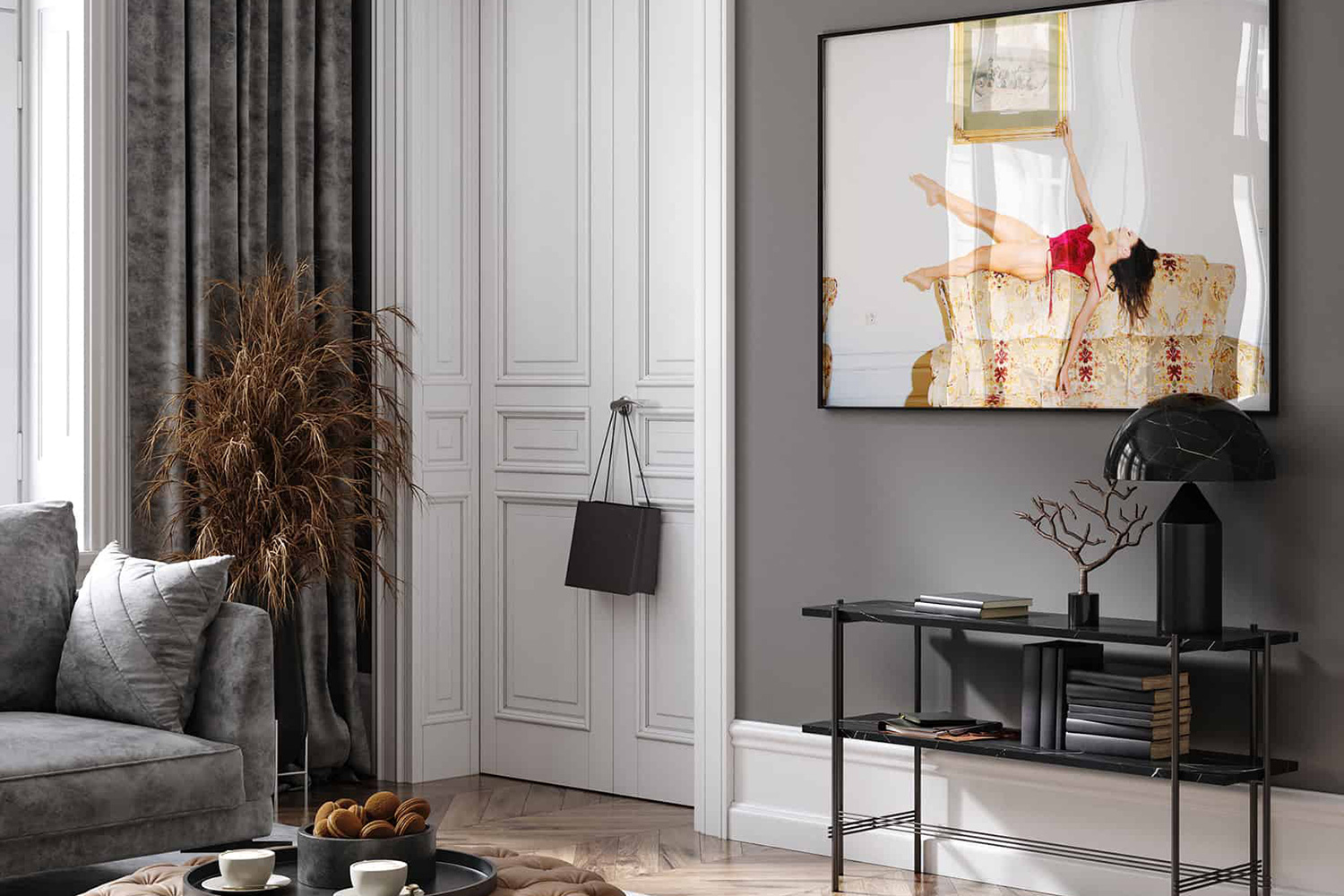
Sensual art is not a piece of furniture.
You don’t put it there just because there’s still space on the wall. And you don’t hang it up so that someone will say, “Oh, how bold.”
If a picture works only because of boldness, it’s not a picture. It’s a pose. And poses don’t age well.
The better question isn’t, “Am I allowed to do this?”
but rather: Where can you display aesthetic body art without having to constantly explain it—simply because it fits perfectly there?
Living Room: The room where everything is immediately noticed
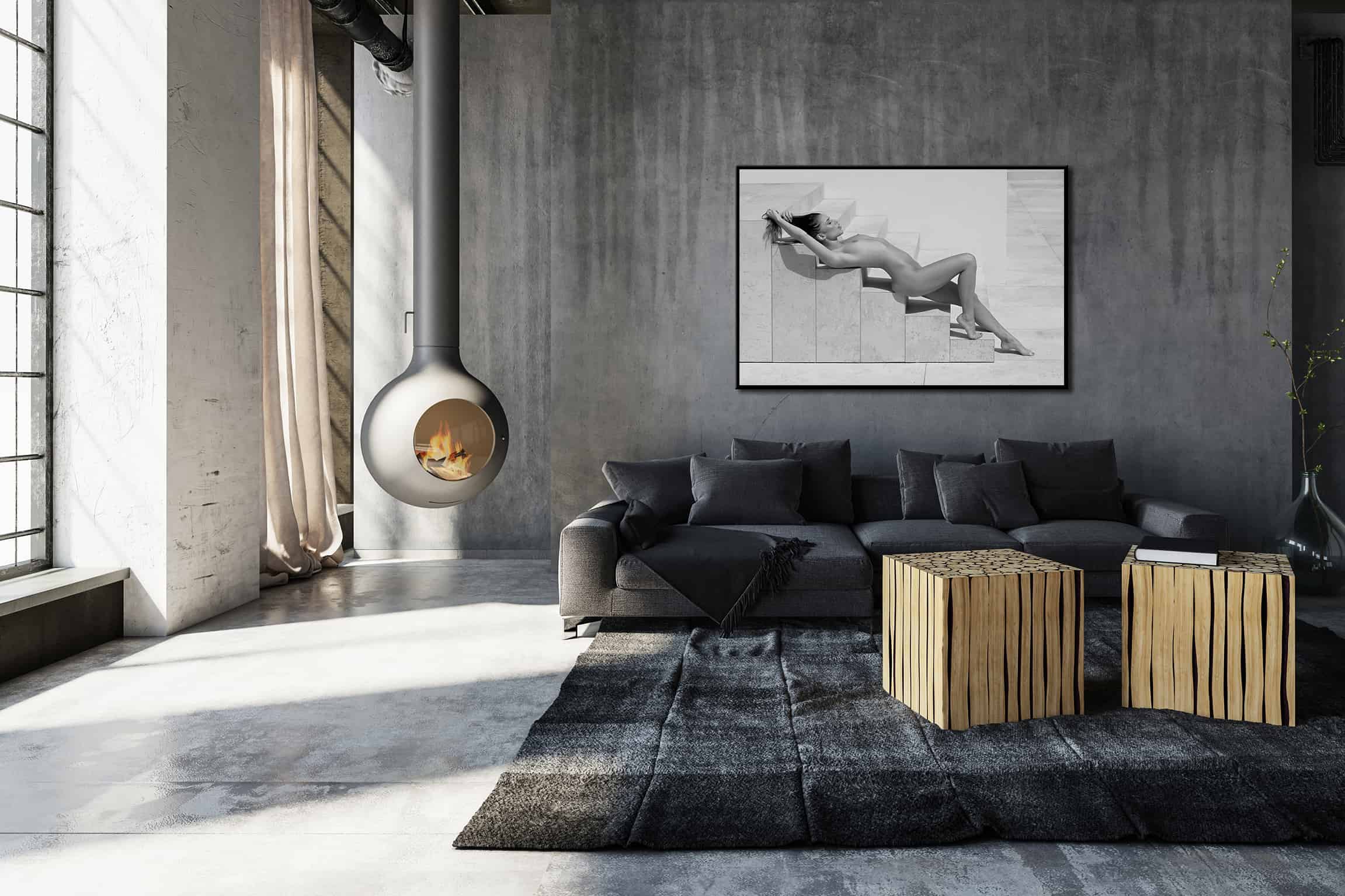
In the living room, everything is scrutinized. Not directly, more in passing—but very thoroughly. People sit down, let their gaze wander, and somewhere in the back of their minds, a silent assessment takes place: What kind of house is this?
Sensual photography can work wonderfully here—but not according to the guests’ rules. The crucial question isn’t “What will the visitors say?” but rather: Who does this space belong to?
If you live here, then this isn’t a stage for other people’s morals. This is your everyday life. Period.
What rarely works well in the living room, however, are paintings that scream “Hello!” Not because you should be ashamed of them—but because they make the room feel unnecessarily cluttered. A good living room painting has a subtle effect: calm, clear, and present. It hangs there as if it had always been there.
And if someone gets upset: honestly—I couldn’t care less. You don’t have to explain anything or reassure anyone. When someone stumbles over a painting in your living room, they’re usually not stumbling over the art—they’re stumbling over themselves.
A simple test:
If you feel the need to justify yourself even as you’re hanging it up, then maybe it’s not hanging wrong—but you’re not hanging it in a way that’s completely true to yourself yet.
Bedroom: A Private Space
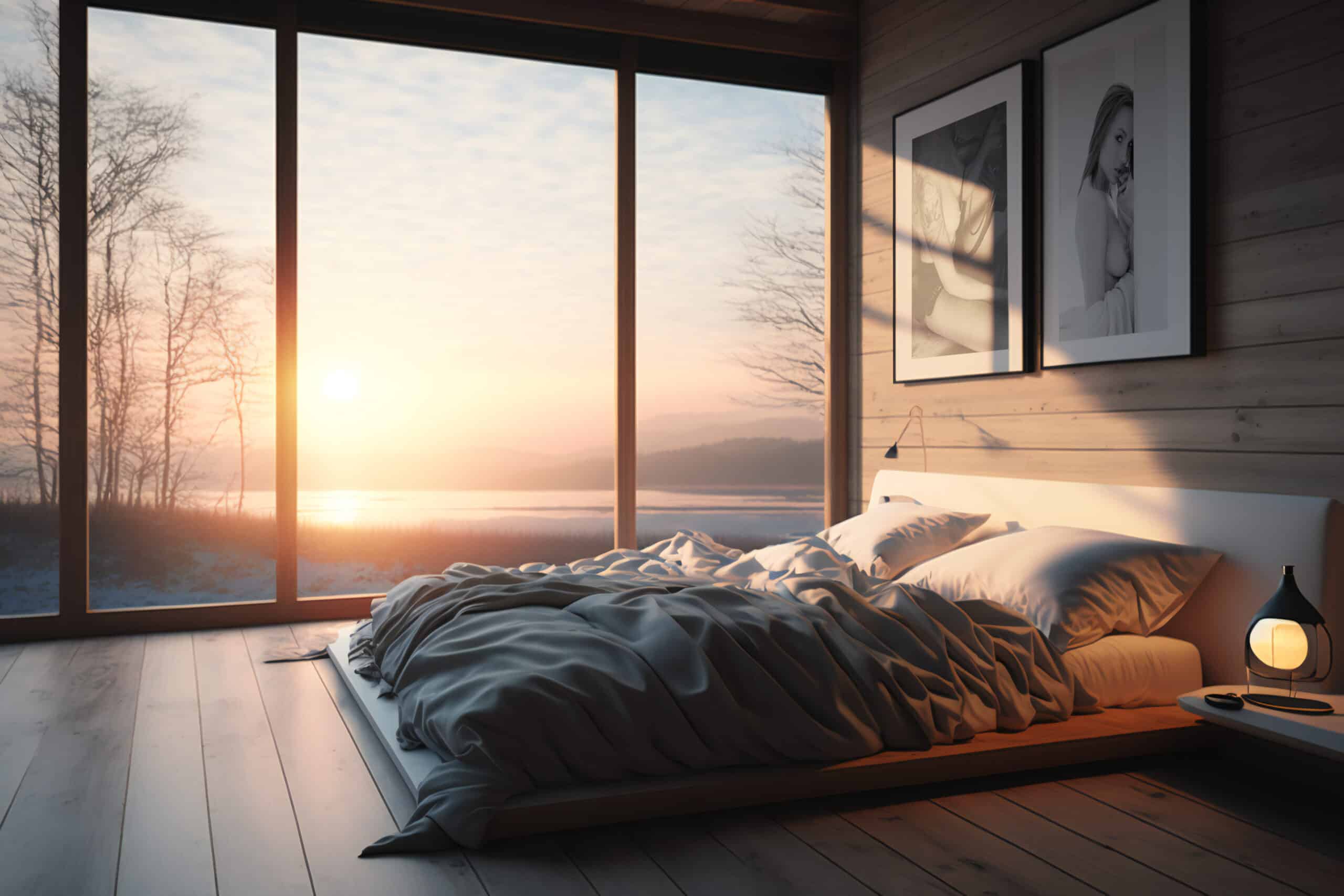
In the bedroom, no one’s watching. No audience, no comments, no “Interesting…”. Here, a picture doesn’t have to please anyone. The only thing that matters is whether it feels right to you.
Aesthetic nude photography often has its greatest impact here because it doesn’t have to fight for approval: light, intimacy, fragments, movement—things you never “finish looking at,” but keep discovering anew.
Bedrooms don’t automatically “handle more.” They handle different things.
If you keep glancing over in the dim light, as if you had to justify yourself or make a decision, it’s too much for the bedroom. Not because it’s forbidden—but because the room then loses its sense of peace.
Bedroom pictures can be left out in the open. They just shouldn’t be wobbly.
If you walk in at night and it gets quieter instead of louder, it’s hanging right.
Workspace: Focus with a distraction—or not
In the studio, people are also being watched—just in a different way. Here, what matters isn’t whether something “fits,” but whether it throws you off track. Body-focused art works there when it’s clear: no games, no gimmicks, no motifs that constantly nudge you.
The best images are those that convey composition, light, and tranquility. Presence, yes—but in a way that allows you to keep working without constantly having to look at them.
And the same applies here: this isn’t a moral issue. It’s just everyday life.
If you notice that your mind keeps “wandering” while you’re thinking, something’s off.
If it’s just there—and every now and then provides the perfect counterbalance to numbers, gadgets, and routine—then it’s just right.
Hallways & Corridors: Spaces for Art That Makes an Impact as You Pass By
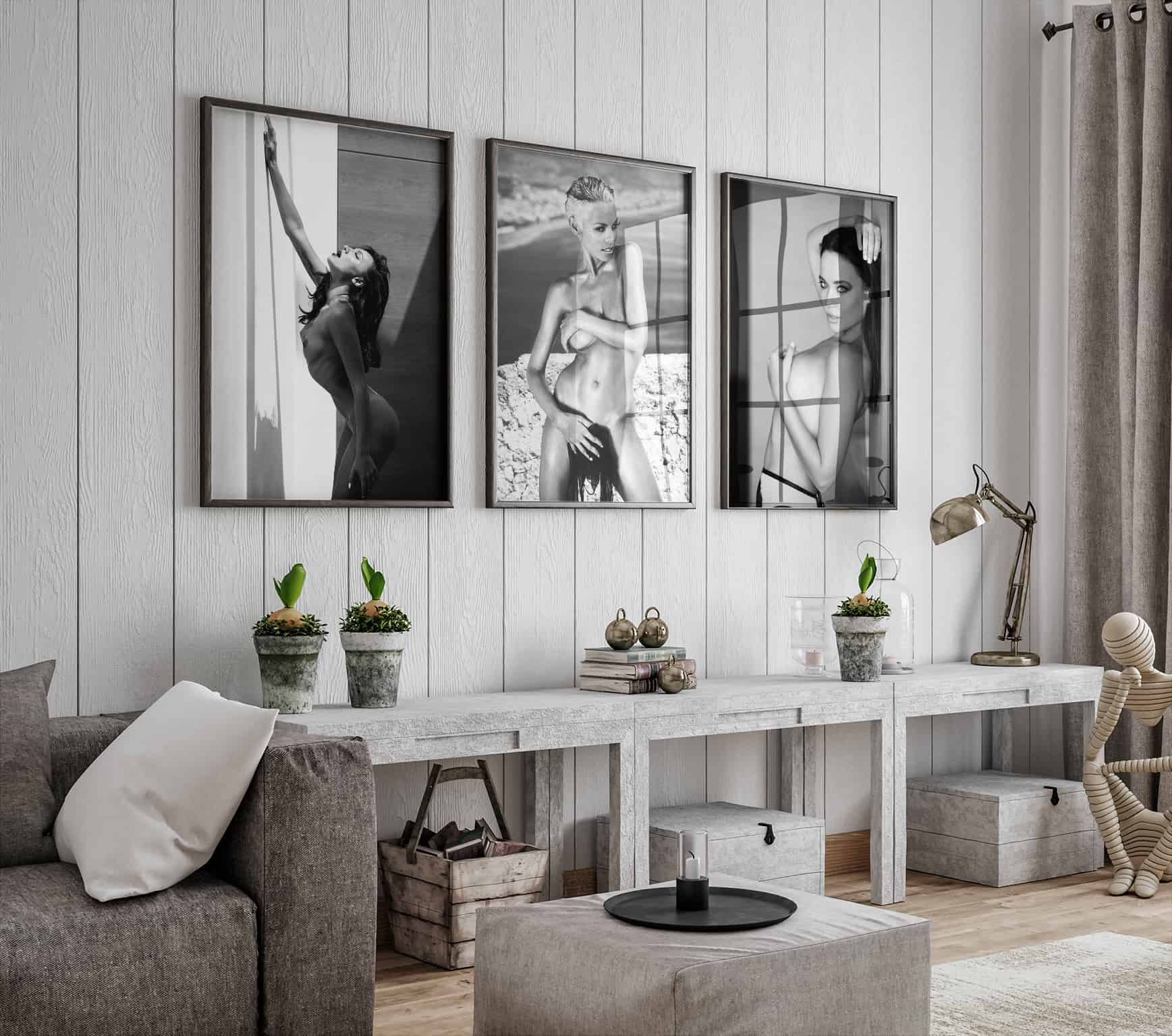
Hallways are brutally honest. You rarely stand there for long. You walk by. You’re carrying something. Your mind is already half somewhere else. That’s exactly why motifs that would quickly become “too much” elsewhere work here.
The ideal images are those that don’t demand attention: black-and-white photos, photo series, architectural elements, movement, shadows—things that aren’t discussed at length, but rather touched upon briefly.
A hallway can handle art that doesn’t have to be “new” every day.
It stays fresh because you’re not constantly staring at it. And if you still find yourself slowing down every now and then, for no reason at all—then the picture is working. Just right.
Background information, in case you want to dig deeper:
How limited editions work
When a Wall Isn’t the Right Fit: Art You Don’t Exhibit, but Discover
Sometimes the problem isn’t art, but everyday life. Family. Visitors. Spaces that are never truly neutral, because someone is constantly marching through them and imposing their opinions on everything.
Then you don’t have to argue anything away. You just have to rephrase it:
- Photo Books – lying there like harmless paper. Only showing themselves when you want them to.
To the books - Sensual Art Calendars – a clear frame: time-limited, private enough, without the grand theater.
To the calendars - Small Prints – understated, but authentic. Not just “decor,” but rather found objects with substance.
SIGNED.FRAMED.ICONIC. - Collector’s Edition – for the moment when it’s no longer just „a beautiful picture,“ but the work the room is built around.
To the Collector’s Edition
This way, the picture remains part of the home—without having to be constantly visible.
In the end, it comes down to something very simple
Sensual art doesn’t need a bold setting. It needs a place where it doesn’t constantly jump out at you—but where it doesn’t disappear either.
If you walk by and slow down for a moment without really knowing why:
Then it’s really catching your attention.
For anyone who doesn’t want everything to be public:
Sign up for the newsletter here.