

Fine art nudes are not furniture.
You don’t put it up because there’s empty space on the wall. And you don’t hang it so someone can say, “Oh, brave.”
If an image only works through courage, it’s not an image. It’s a pose. And poses age badly.
The better question isn’t, “Am I allowed to?”
It’s this: Where can you hang aesthetic body art so it doesn’t need explaining—because it simply belongs there?
Living room: The room where everything gets watched
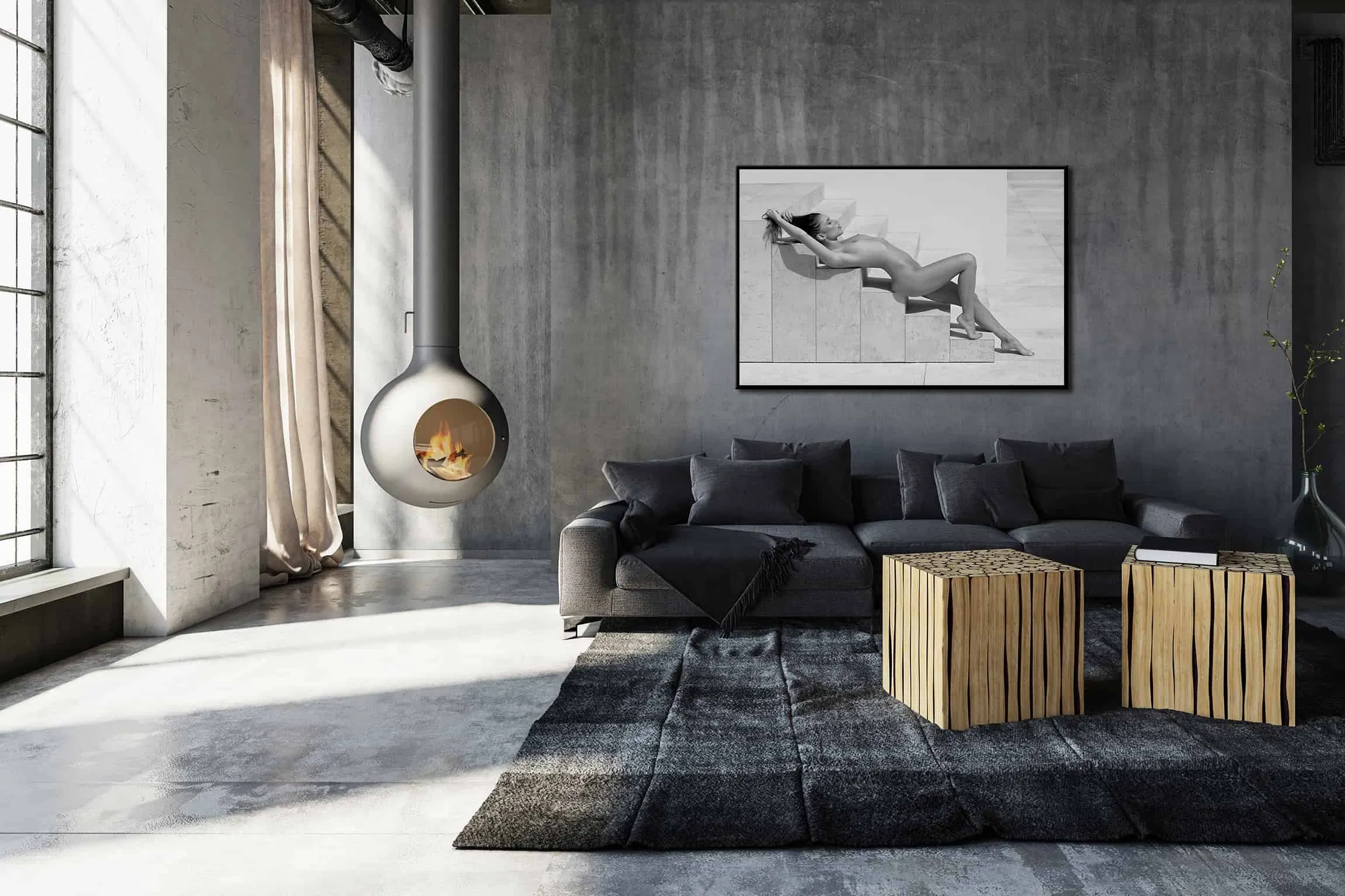
In the living room, everything gets watched. Not openly—more in passing—but thoroughly. People sit down, let their eyes drift, and somewhere in the background a quiet check starts running: What kind of home is this?
Sultry photography can work beautifully here—but not by your guests’ rules. The real question isn’t “What will visitors say?” but: Who owns this space?
If you live here, this isn’t a stage for other people’s morals. This is your everyday life. Period.
What rarely works in a living room are images that say “hello” too loudly. Not because you should be embarrassed—because they charge the room for no reason. A good living-room piece works slowly: calm, clear, present. It hangs there as if it has always been there.
And if someone gets upset—honestly, I wouldn’t care. You don’t have to explain anything or soothe anyone. Most people don’t stumble over the art. They stumble over themselves.
A simple test:
If you already feel the need to justify yourself while hanging it, it may not be wrong—but you’re not hanging it uncompromisingly for you.
Bedroom: The private room
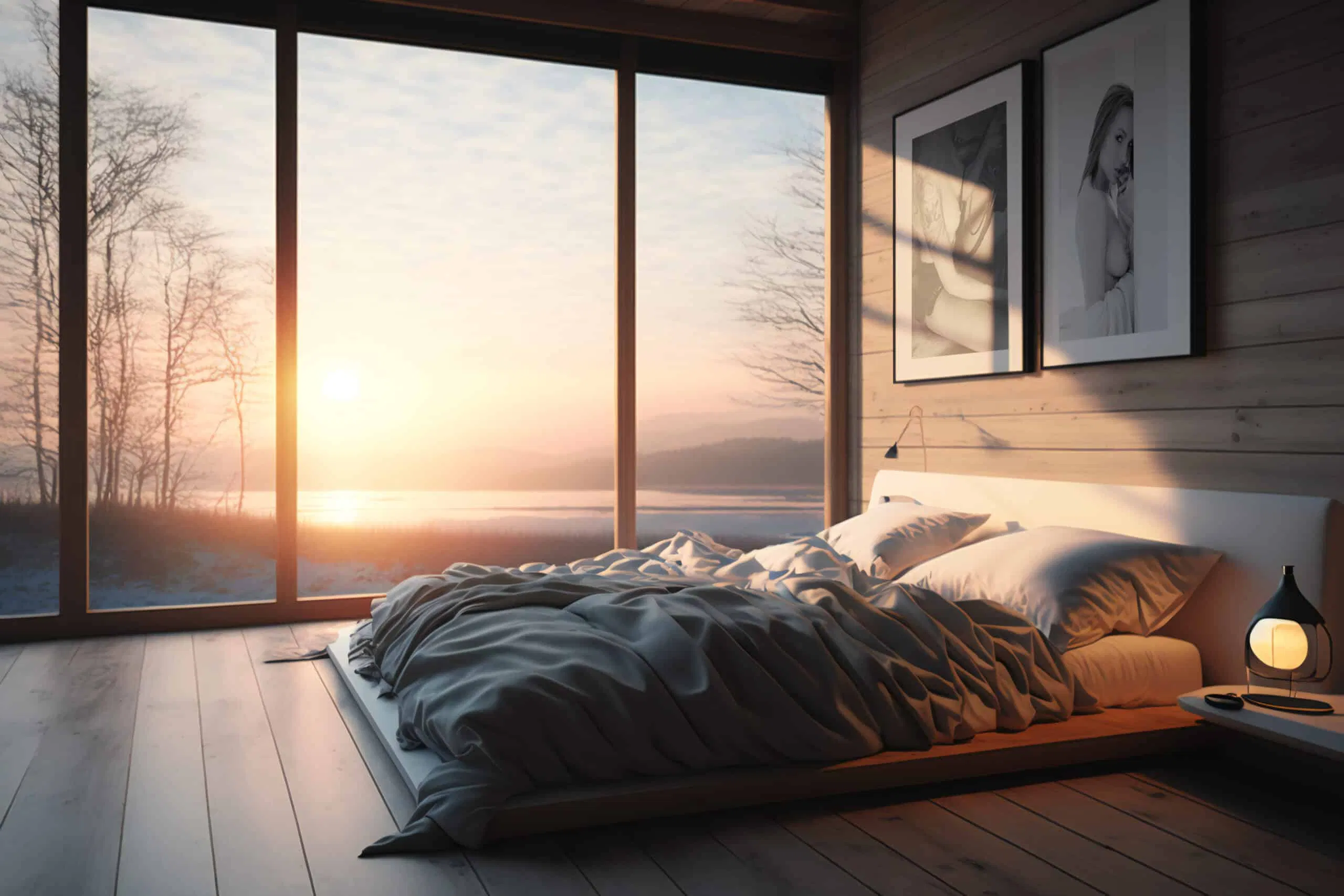
In the bedroom, nobody’s watching. No audience, no commentary, no “Interesting…”. An image doesn’t have to please anyone here. It only has to feel right to you.
Fine art nude photography often hits hardest here because it doesn’t have to fight for approval: light, closeness, fragments, movement—things you don’t “finish looking at”, but keep finding again.
Bedrooms don’t automatically handle “more”. They handle different.
If, in the half-dark, your eyes keep going back to it as if you had to justify yourself or decide something, it’s too much for this room. Not because it’s forbidden—because the room loses its calm.
Bedroom pieces can be open. They just shouldn’t feel nervous.
If you walk in at night and everything gets quieter instead of louder, it’s in the right place.
Office: Focus with a “disruption” that doesn’t have to be one
In a workspace, things get watched too—just differently. Here it’s not about whether something “fits”, but whether it pulls you off track. Artistic nude photography works here when it’s clear: no games, no effect, no image that keeps poking you for attention.
The best pieces work through line, light, and calm. Presence, yes—but in a way that lets you keep working without constantly grabbing at it with your eyes.
And again: no moral debate. Just everyday reality.
If you notice you keep going “briefly away” while thinking, it’s hung in the wrong place.
If it’s simply there—and now and then becomes the perfect counterweight to numbers, devices, and routine—then it’s right.
Hallways & transitions: Rooms for art that works in passing
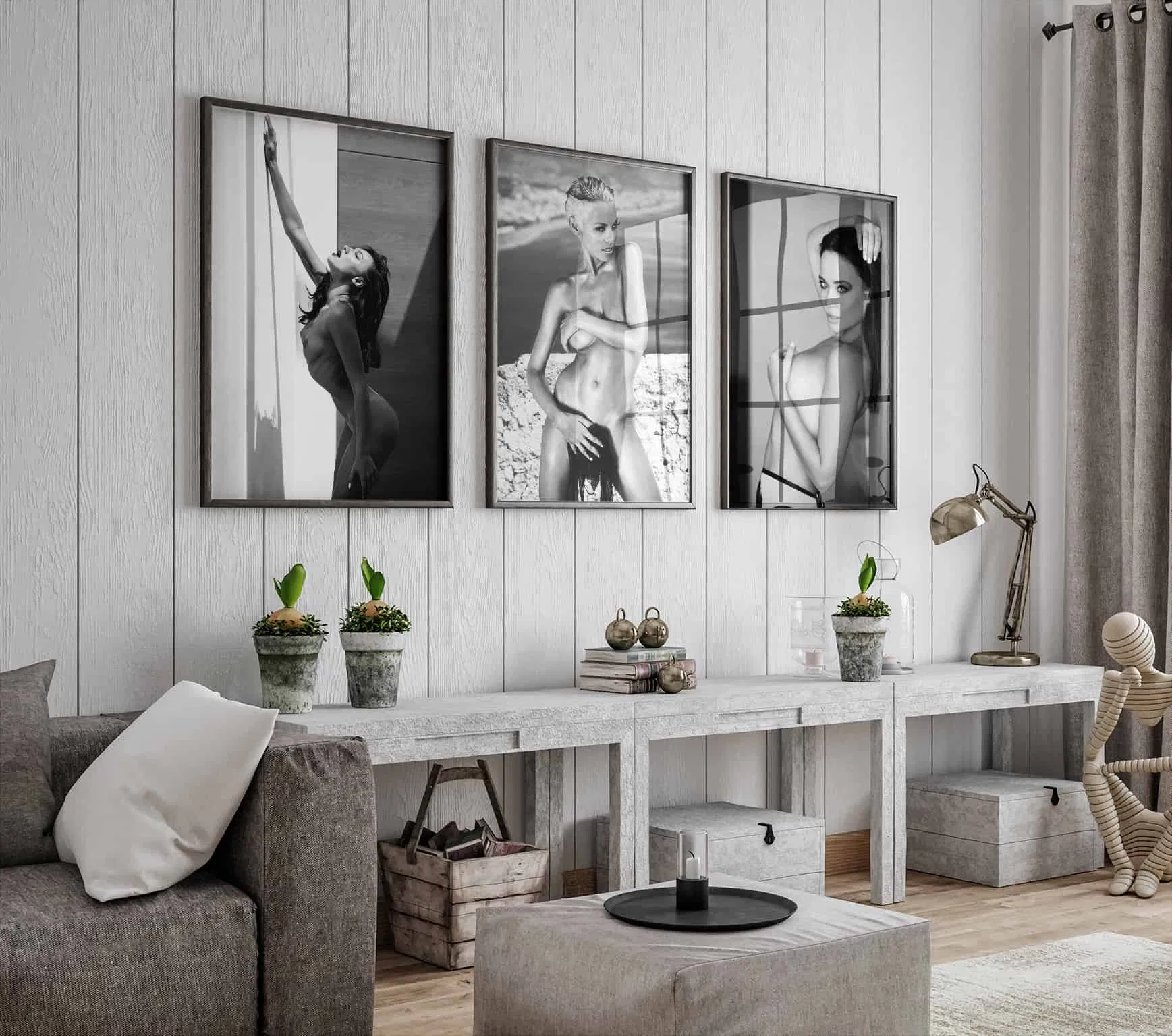
Hallways are brutally honest. You rarely stop. You pass through. You’re carrying something. You’re already half elsewhere. That’s exactly why images that feel “too much” in other rooms can work perfectly here.
Ideal are pieces that don’t demand attention: black & white, series, architectural elements, movement, shadows—things you don’t debate, you just brush past.
A hallway can handle art that doesn’t have to feel “new” every day.
It stays fresh because you don’t stare at it constantly. And if you still slow down now and then for no clear reason—then the image is working. Exactly right.
Background, if you want to go deeper:
How limited editions work
If a wall doesn’t work: Art you don’t display, you discover
Sometimes the problem isn’t the art—it’s everyday life. Family. Visitors. Rooms that are never truly neutral because people keep marching through and bringing opinions with them.
Then you don’t need to argue anything away. You just place it differently:
- Photo books — they sit there like harmless paper, and show themselves only when you want.
See the books - Erotic calendars — a clean frame: time-bound, private enough, no big theatre.
See the calendars - Small prints — understated, but real. Not “decor”, more like found objects with substance.
SIGNED.FRAMED.ICONIC. - Collector’s Edition — for when it’s not just “a nice piece”, but the work you build the room around.
Explore Collector’s Edition
That way, the image stays part of the house—without having to be visible all the time.
In the end, it comes down to something very simple
Erotic art doesn’t need a “brave” spot. It needs a place where it doesn’t jump at you all day—without disappearing.
If you walk past and slow down for a second without knowing exactly why:
Then it’s hung right.
For everyone who doesn’t need everything to be public:
Sign up for the newsletter here.
