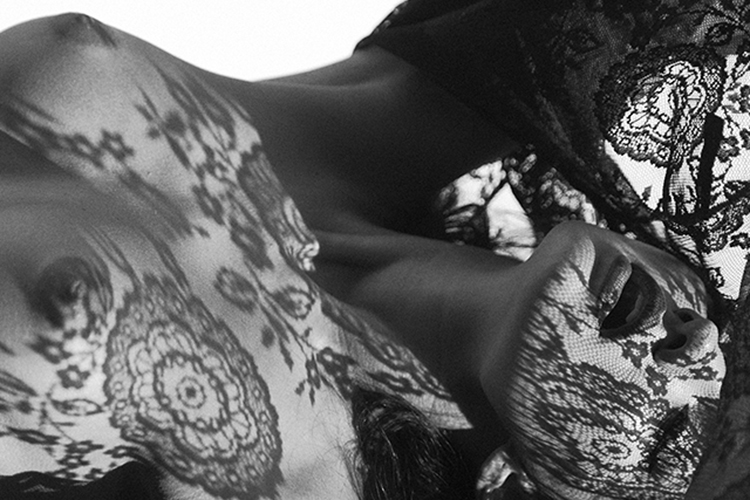
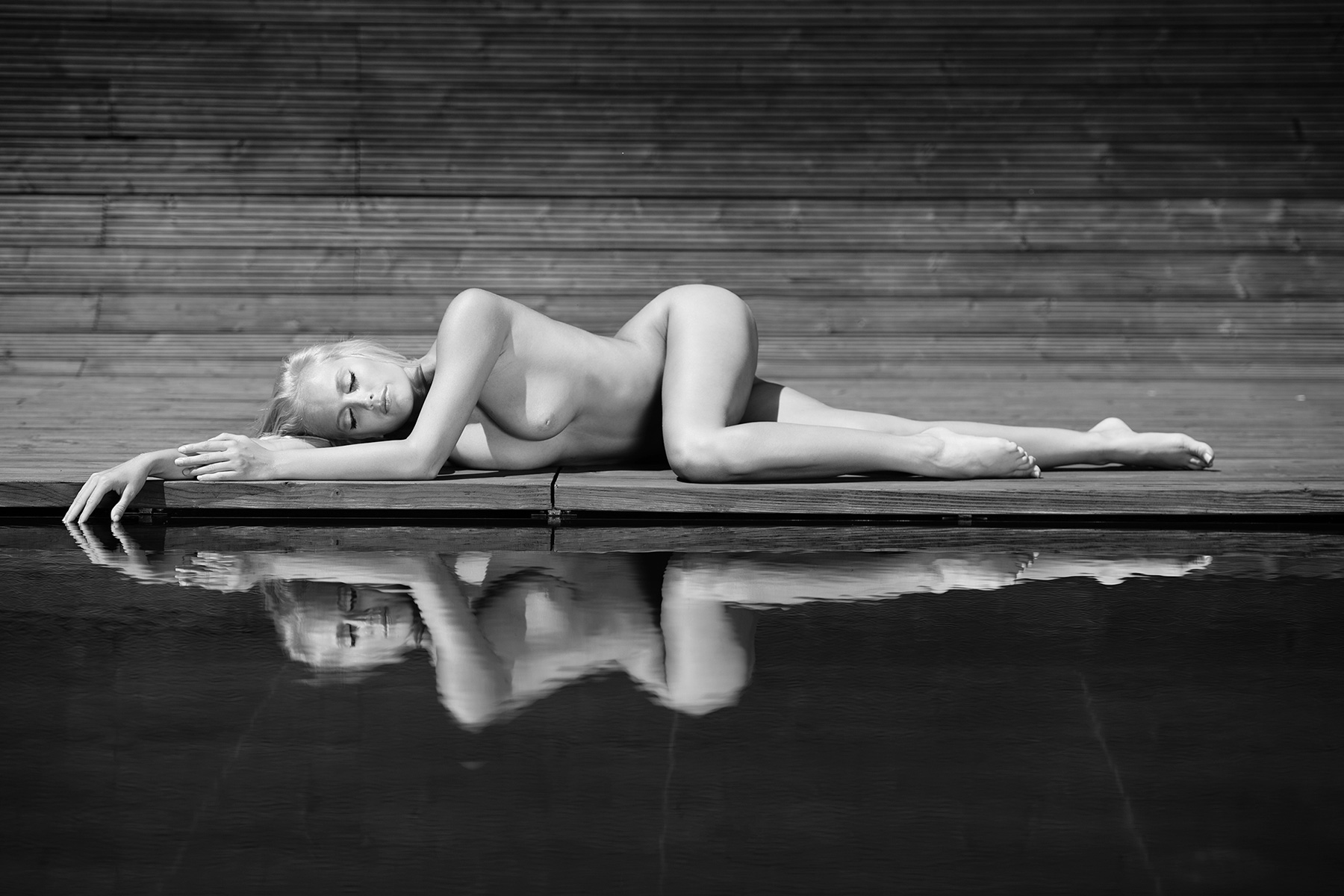
Not a poster. Not a file. A documented work.
If you’re looking for limited edition fine art nude photography — numbered, signed, with full provenance — your options are narrower than most people expect. That’s not a problem. It’s the point.
Scarcity is the mechanism. A work that exists 500 times is a product. A work that exists 11 times is a different conversation. Here’s where serious collectors look, and what separates one source from another.
Direct from the photographer
The most direct route. No gallery markup, no intermediary, no platform taking a cut. You buy from the person who made the work — and you can ask them directly about it.
When you buy directly, you typically get:
- A hand-signed print
- A numbered certificate of authenticity — ideally with hologram and registration
- Full edition documentation: how many exist, what number yours is
- A rear label with title, edition size, paper, and dimensions
- Direct access to the photographer for questions about the work
Martin Wieland Arts (martin-wieland-arts.com/en/) is one of the few European photographers selling limited edition fine art nude photography exclusively through a direct channel. No retail partners, no platforms. Everything goes through the shop.
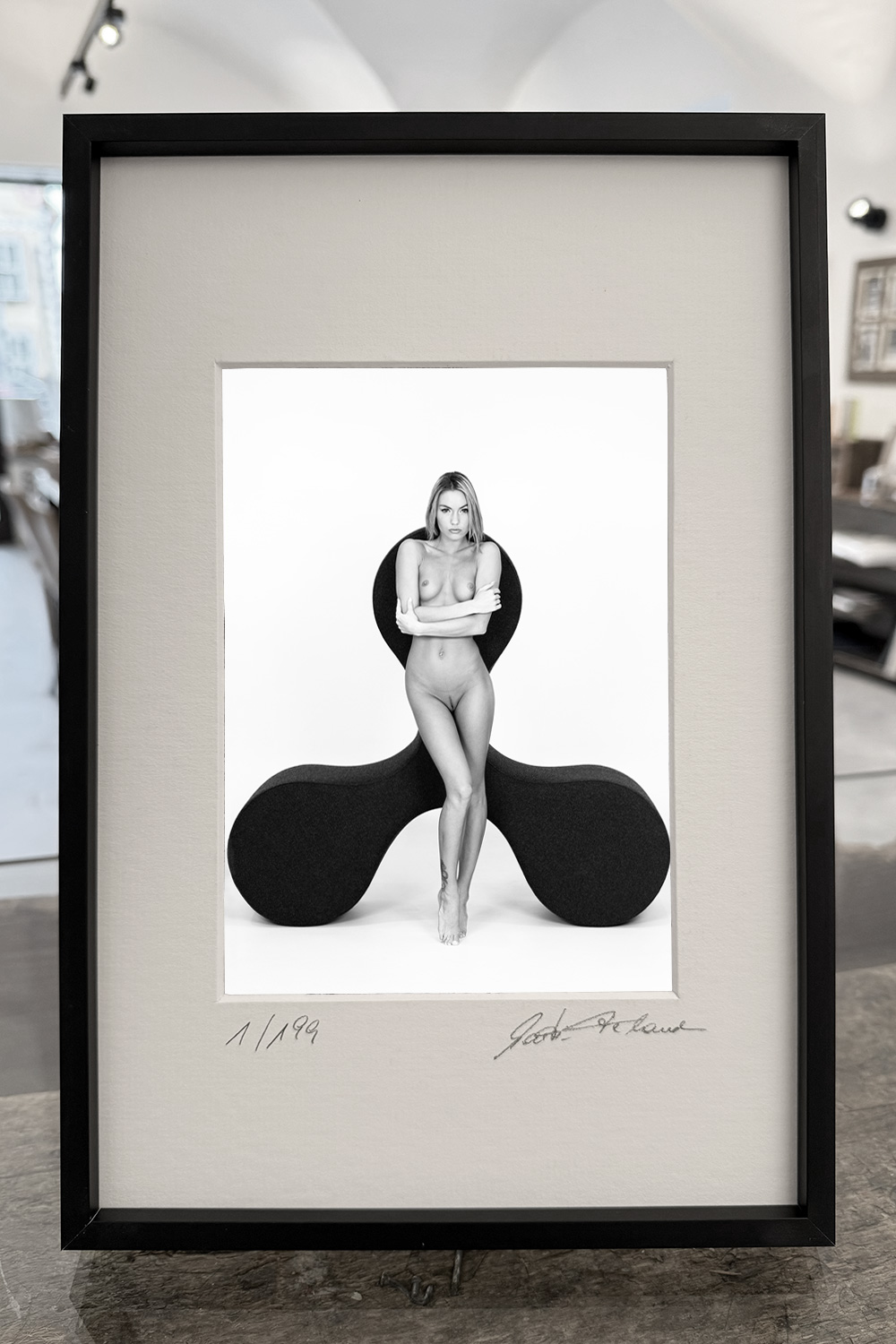
SIGNED.FRAMED.ICONIC. — the entry point
The SIGNED.FRAMED.ICONIC. series is where collecting starts. Two new works per week — one in color, one in black and white — each in an edition of 199, elegantly framed, hand-signed, and delivered in a collector’s box. Each motif is available for four weeks only. Then it’s gone.
A real signature, a real frame, and a real edition limit. This is the entry into collecting — accessible, physical, and genuinely limited. Newsletter subscribers get first access to Hidden Drops: motifs that never appear in the public shop.
Works from this series have entered private collections across more than 20 countries on five continents.
Collector’s Edition — the next level
The Collector’s Edition goes further. Editions of 3 to 11 prints depending on format — the largest formats exist only three times. Each work comes with a hand signature, individual numbering, a registered certificate of authenticity with hologram, and a rear label documenting title, dimensions, paper, and edition number.
One more thing worth knowing: prices rise with every work sold within an edition. The second collector pays more than the first. The tenth pays more than the ninth. Scarcity has a price logic here — and it’s transparent.
For collectors looking to buy limited fine art nude photography online — signed, numbered, with full provenance — buying directly from a photographer is the clearest path.

Gallery platforms
Saatchi Art and Artsy carry figurative and nude fine art photography from photographers worldwide. The range is wide. Quality and documentation vary significantly — some works are genuine limited editions with full certificates, others use the word “limited” loosely.
Before buying from any platform, check:
- Is the edition size fixed and documented?
- Is the print signed by hand — not a printed facsimile?
- Does a physical certificate exist?
What platforms do well: discovery. You can compare many artists quickly. What they rarely offer: the direct relationship with the photographer, and the depth of documentation that serious collectors require over time.
Auction houses
For established names — Helmut Newton, Herb Ritts, Guy Bourdin — major auction houses like Christie’s, Phillips, and Sotheby’s are the primary secondary market. Provenance is usually clear, and prices reflect documented collector consensus.
For contemporary photographers, auctions are rarely the right entry point. Editions are less documented, market value less established, and prices often reflect speculation rather than substance.
What makes a limited edition actually limited
This is worth understanding before you buy anywhere. A genuine limited edition fine art print has:
- A fixed, documented edition size — stated on the certificate and rear label. No reprints. Ever.
- Hand signature — not a stamp, not a printed facsimile.
- Individual numbering — “3/11” means the third of eleven existing works.
- Archival paper — Hahnemühle, Canson Baryta, or equivalent. Not standard photographic paper.
- A certificate — ideally with hologram, registration number, and photographer contact for verification.
- A rear label — title, dimensions, paper, edition number, date. This is the work’s identity document.
The number itself is secondary. What matters: is it fixed, is it documented, and are there no exceptions? An edition of 199 that closes permanently is more honest than an edition of 20 that quietly gets reprinted.
If the documentation is missing, the word “limited” is marketing language. Not a collector’s document.
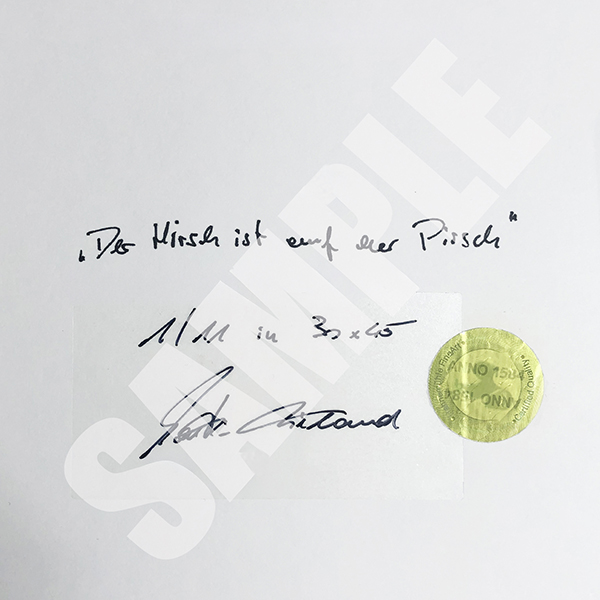
Collector’s Edition – reverse side of the original print with artwork title, edition number, signature and hologram (SAMPLE) – limited fine art photography
Fine art nude vs. erotic photography: why the distinction matters for collectors
Not for moral reasons. For market reasons.
Fine art nude photography sits within the tradition of figurative art. The body is the subject. Full stop. It gets collected, exhibited, insured, and resold. The documentation exists because the work is meant to outlast the person who bought it.
Erotic photography is a different category — consumed differently, priced differently, rarely documented as a collectible. There’s nothing wrong with it. It’s just not the same market, and conflating the two is an expensive mistake.
If a platform or photographer doesn’t make this distinction clearly, that tells you something.
A short checklist before you buy
- Is the edition size stated clearly — and genuinely fixed?
- Is the print signed by hand?
- Does a physical certificate exist, with hologram or registration?
- What paper and printing process was used?
- Can you verify the edition number directly with the photographer or gallery?
Yes to all five: you’re buying a collector’s piece.
Missing one or more: you’re buying a print.
Know which one you want before you pay.