The Psychology of Eroticism: Why certain images slow us down
Eroticism in photography is often misunderstood. It is confused with what you see. But true aesthetic nude photography does not function through the completeness of what is shown, but through what it triggers in the viewer.
Do you know that moment? You are scrolling through a flood of images or walking through a gallery, and suddenly someone pulls the handbrake in your head. A photo – perhaps completely unspectacular: a shoulder in semi-shadow, a gaze lost in space, the mere tension in a movement. And you stop in your tracks.
This has little to do with instinct. It is pure perception. It is that rare moment when feeling is faster than the mind.
The moment that stops the gaze
There are motifs that don’t hit us head-on. They come from the side – quiet, casual, almost incautious. A good image doesn’t impose an emotion on you; it allows it to emerge within you.
In my artistic image compositions, I look for exactly these fragments:
-
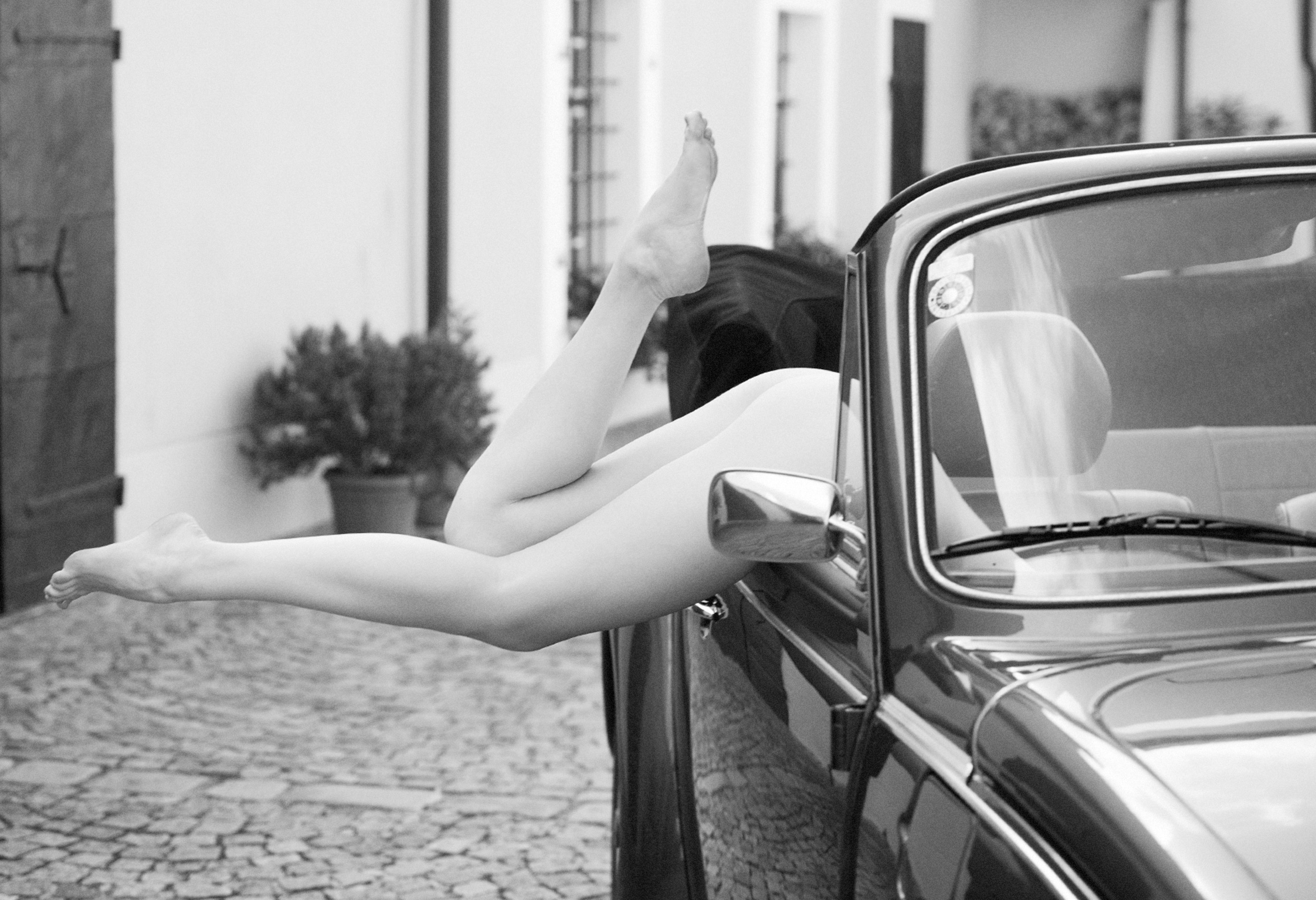
The suspended construction: A movement caught between two states.
-
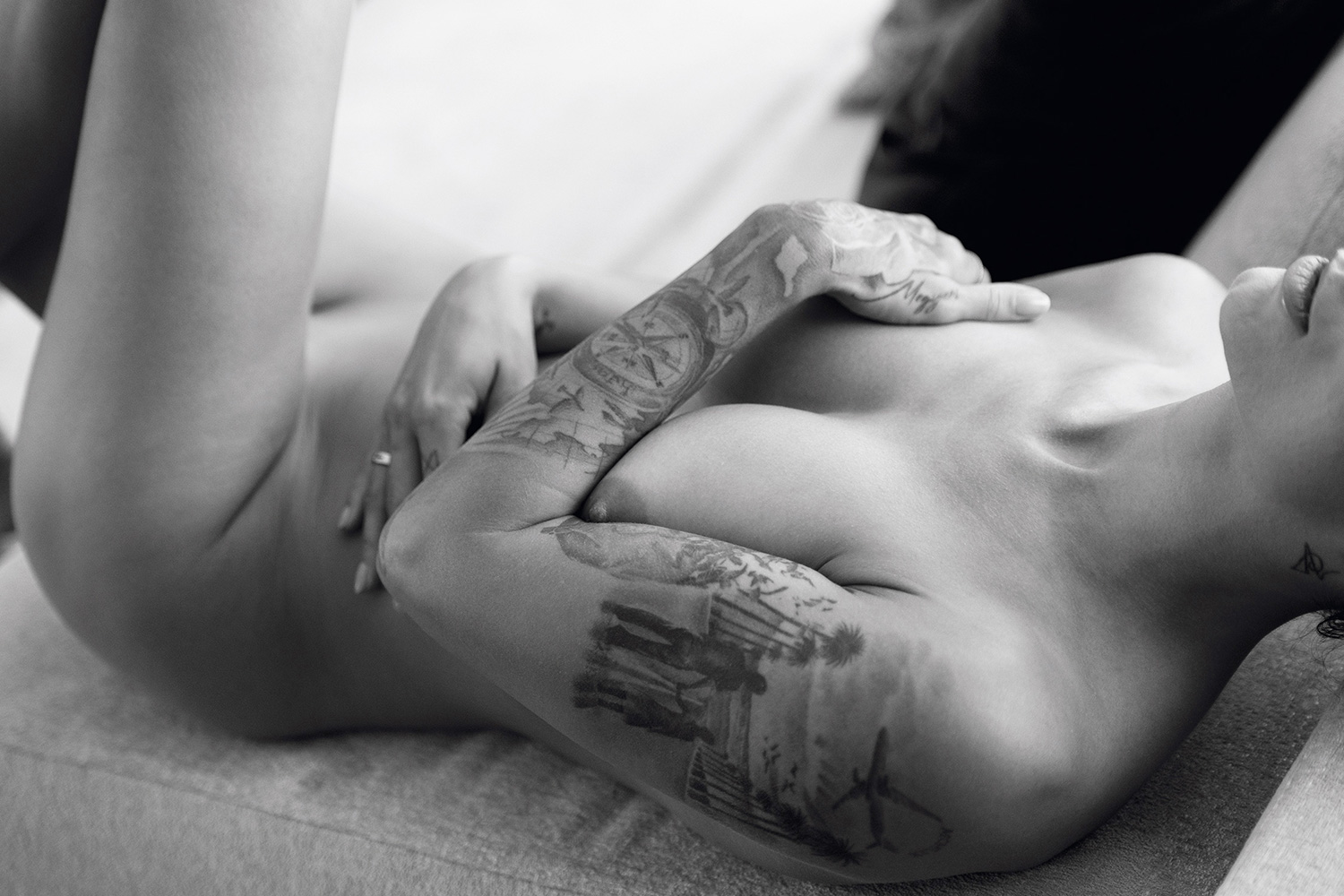
The fleeting beginning: A touch that has barely begun and whose end is already missed.
-
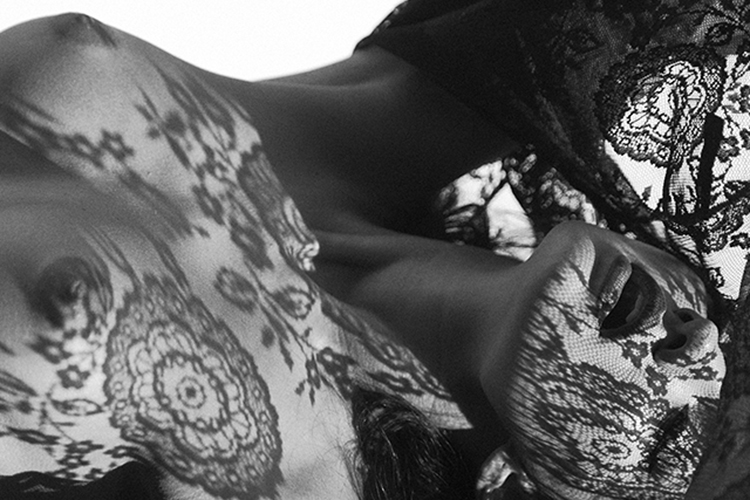
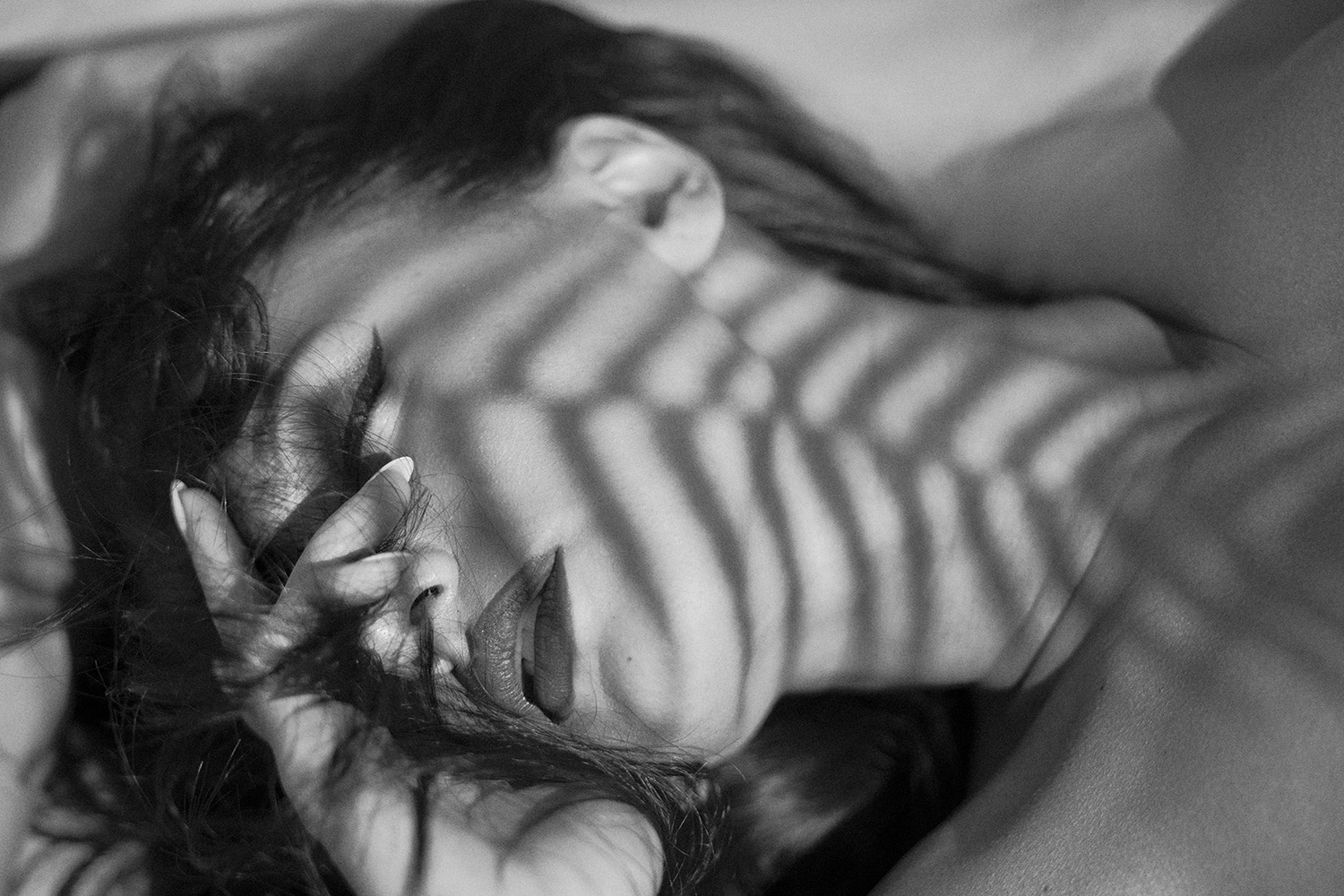
The sparse light: Shadows that give form its space.
-
The absent gaze: A face that explains nothing and does not pose for the camera.
-
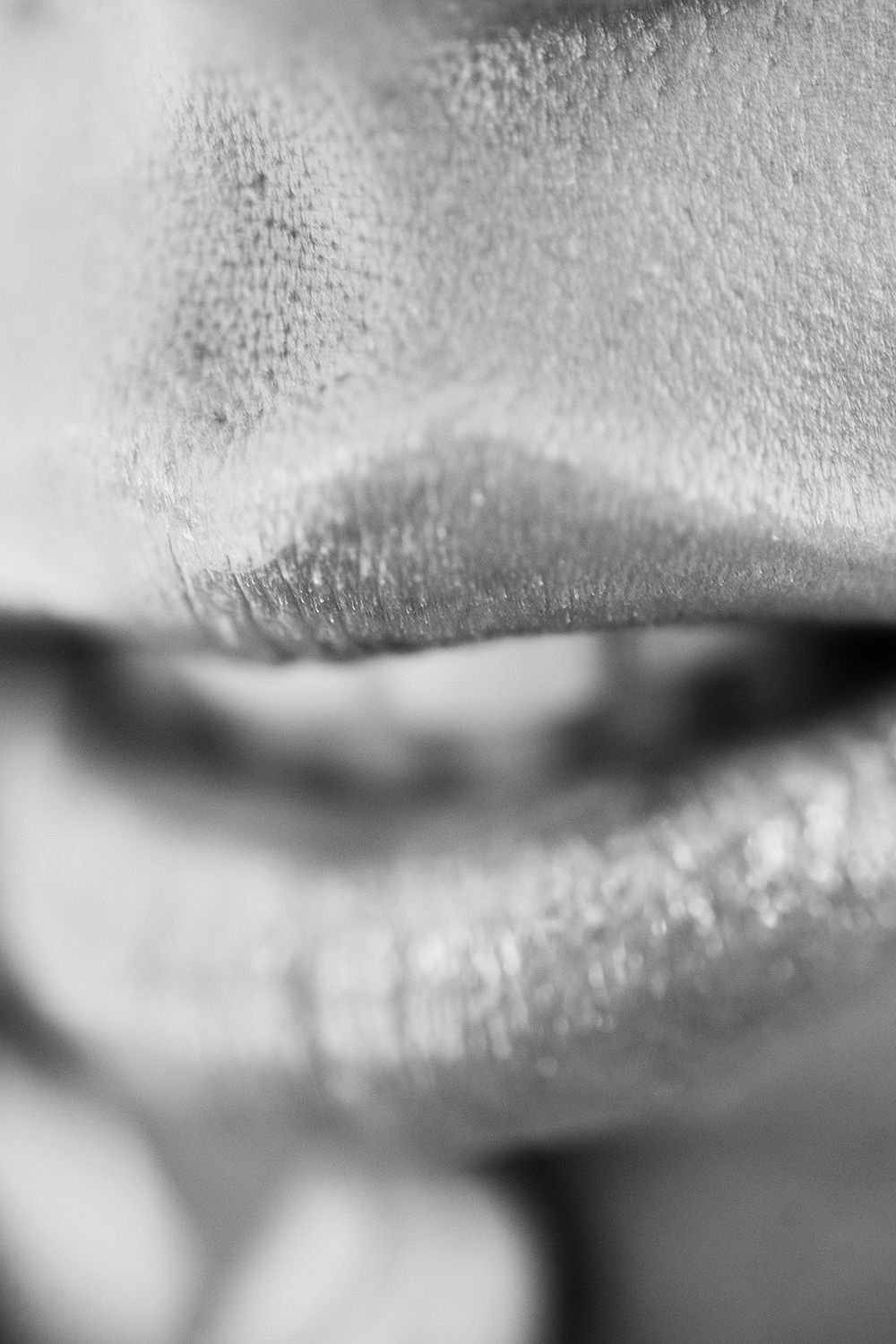
The unfinished crop: A detail that leaves open what happened before and what might come after.
The gaze doesn’t linger because of nudity. It lingers because there is an irritation that doesn’t resolve itself immediately.
The power of the unfinished
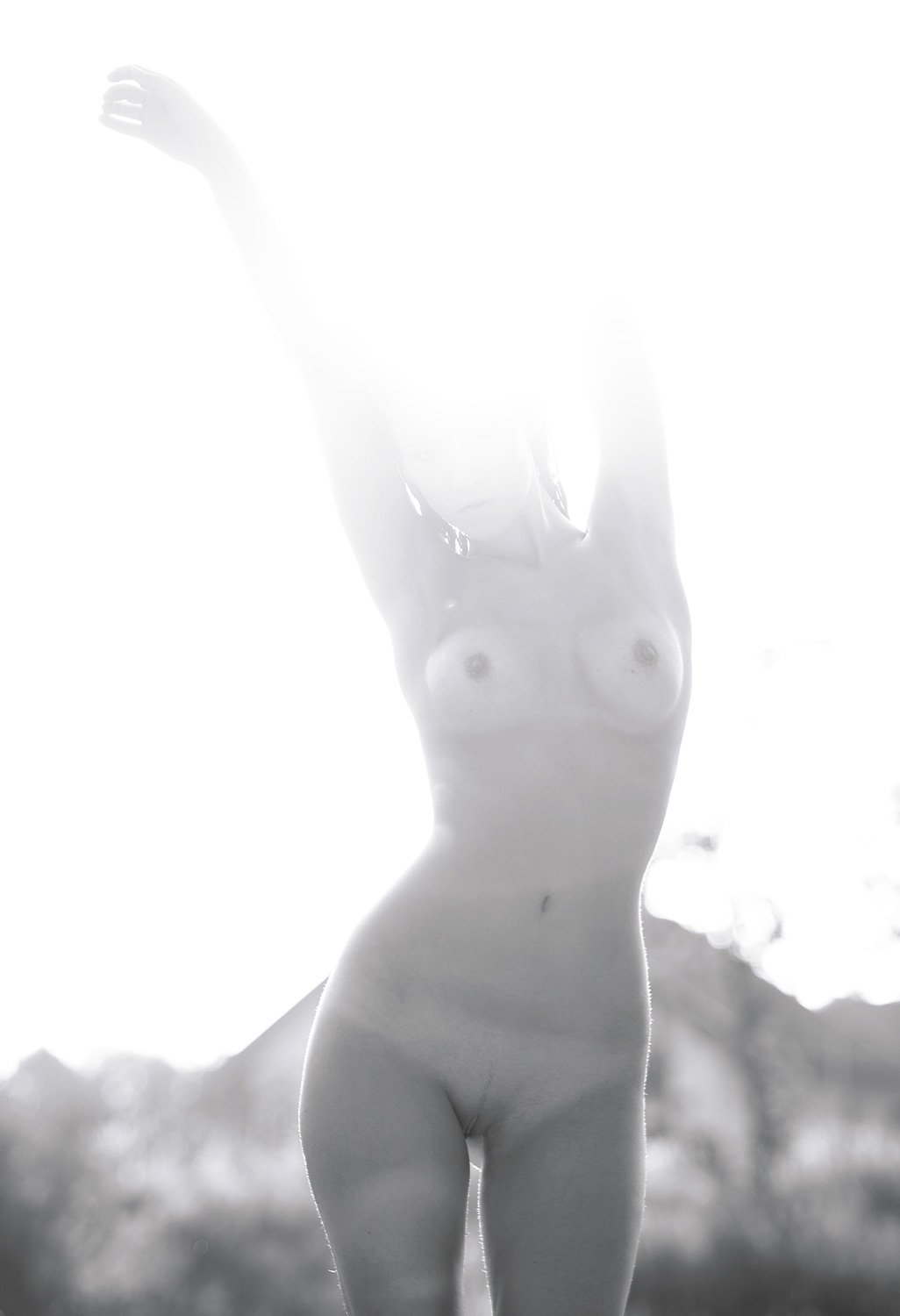
Information kills the thrill. A perfectly lit body is a documentation; a fragment is a mystery. We need these gaps to think an image to its end.
Especially in black-and-white photography , the value lies in the unfinished:
-
A detail without immediate resolution.
-
A pose that wasn’t built for the viewer, but simply is.
-
A moment that feels as if it remained unobserved only by chance.
This gap creates a sense of proximity that no staged production can ever achieve.
Intimacy without intrusion – aesthetic fine art nude photography
An image that touches me doesn’t push itself forward. But it doesn’t pull back either. It is simply there – simple, quiet, without expectation of the person looking at it.
It is this distance that works. It meets a deep human need: the longing for closeness without feeling the constriction of someone else’s intention. In the silence of the image, we encounter not only the motif but always a part of ourselves. Our own memories, longings, and bodily sensations play the game in our heads to the end.
Why silence lingers
The most powerful works of fine art nude photography are rarely loud. They don’t try to convince or overwhelm you. They leave you room to breathe. You look, you look away – and hours later, you realize the image is still there, somewhere in the back of your mind.
Slowness is not an obstacle here; it is the actual point. Fine art nude photography is the art of the space in between. A brief standstill between perceiving and understanding.
When a picture achieves that, it is erotic – regardless of how much or how little skin it shows.
This isn’t just a subjective feeling. The art world calls this deliberate pause ‘Slow Looking’. The Tate Gallery has written a guide that gets straight to the mechanics behind it: Slow Looking
If you are looking for this calm – beyond the screen:
SIGNED. FRAMED. ICONIC.
Framed, autographed, edition of 199 — available for four weeks, then gone.
👉 View the series
Collector’s Edition
Individual works, strictly limited, with certificate of authenticity.
👉 To the Collector’s Edition
The Book & An Other Book
336 pages, 29×36 cm — not a “best of,” but a cross-section.
👉 View the book bundle
Nude calendar
Two versions, large format, hand-signed, limited edition.
👉 View the calendars
Nude Photography
How I work, where the photos come from.
👉 About Nude Photography
🔗 Sign up for the newsletter now — new releases & early access